An international cohort of data scientists, plant researchers, and engineers gathered at the International Institute of Tropical Agriculture (IITA) in Accra, Ghana, in March for an international hackathon aimed at securing the future of food.
The five-day event from 9 to 13 March 2026, was co-led by the University of Cambridge and challenged interdisciplinary teams to hack into real-world datasets to uncover the genetic links behind photosynthetic performance, a critical step in developing climate-resilient crops for sub-Saharan Africa and beyond.
By combining machine learning and AI with plant physiology, the aim was to work towards transforming complex biological data into concrete levers that can boost agricultural productivity in the face of a rapid climate change.
The photosynthesis challenge
The initiative, ‘Hacking for photosynthesis: from field photosynthesis to genetic architecture’, focused on uncovering how genetic differences shape the way plants capture light, process carbon, and survive drought. As climate change continues to threaten agricultural stability, particularly in sub-Saharan Africa, enhancing the efficiency of photosynthesis has emerged as a critical pathway for improving crop resilience and productivity.
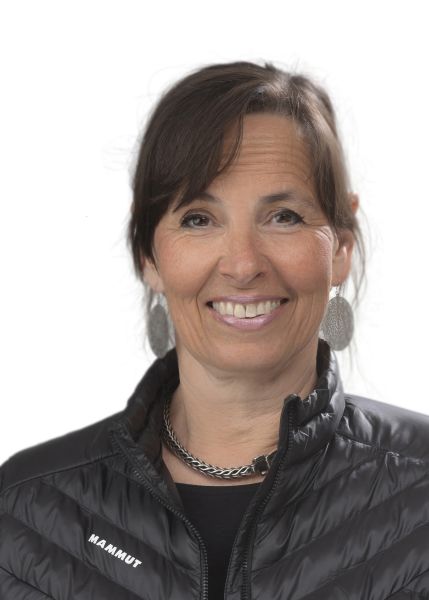
Dr Johannes Kromdijk, Head of the Environmental Plant Physiology group at the Department of Plant Sciences in Cambridge and a member of the event’s organising committee, said: “Photosynthesis remains a major underutilised route to improve crop productivity. However, because it responds very strongly to short-term environmental variation, resolving genetic effects based on ‘in situ’ observations of photosynthesis in field-grown crops presents a formidable challenge.”
Five days of interdisciplinary innovation
The hackathon was designed to break down traditional academic silos, bringing together a diverse group of experts including data scientists, plant physiologists, geneticists, software engineers, and breeders.
Professor Anna Matuszyńska from RWTH Aachen University who was also on the organising committee, said: “The complexity of the collected photosynthetic data meant we needed a very diverse group of experts in the room. Unlike traditional hackathons, we didn’t just bring in coders and programmers, as interpretability of the results was central to our goals. It was critical to the success of the event that we had the right balance of breeders, plant physiologists and computational biologists working side by side.”
Professor David Kramer, Science Director of the Jan Ingenhousz Institute (JII) and another of the organisers, said: “The hackathon achieved an exciting proof of concept by showing that several of the groups were able to develop approaches that revealed underlying genetic controls of photosynthesis. The next step is to see if these tools are more broadly useful by turning them into open science tools that others can use.”
Dr Olakunle Sansa, a Postdoctoral Fellow at IITA and IITA-CGIAR host for the workshop noted the importance of building capacity in Africa to manage the complexities of photosynthesis research for effective use in crop breeding programmes. “It was particularly exciting to see emerging insights from trait discovery, mechanistic understanding, and genetic linkages to photosynthetic performance,” he said.
Bridging the gap: data science and plant breeding
A central theme of the event was the integration of cutting-edge computational tools with traditional plant science.
Participants were tasked with diving into curated, real-world datasets provided by JII, IITA and others to explore the complex links between genotypic variation and photosynthetic performance.
Professor Kramer said: “A central focus of the hackathon is to transform the way we do science by using a new open science platform called openJII.org.
“Before this, we didn’t have the data sets to apply modern data tools analysis – partly because all the experiments were isolated. Now for the first time, we have high throughput instruments that are widely available and a community of researchers willing to share the results.
“The hackathon provides the missing piece: figuring out how to use these combined resources to solve this huge problem and turn this into a tool that others around the world can use to improve crops.”
The collaborative atmosphere allowed experts in Artificial Intelligence (AI) and Machine Learning (ML) to work directly alongside agronomists and plant breeders to achieve common goals.
Global partnerships for sustainable food systems
The hackathon was supported by a robust framework of global cooperation and was funded by the Jan Ingenhousz Institute and the University of Cambridge Africa Climate Collaborative programme in partnership with the Mastercard Foundation.
This initiative highlights the power of open science in addressing agricultural challenges. By sharing methodologies and outcomes openly, the organizers aim to support scientists worldwide who are working to improve crop adaptation.
Dominik Vrbic, Technical Program Manager at the Jan Ingenhousz Institute, noted how quickly the teams generated real insights despite coming from different disciplines. Similarly, participants like research scientist Adenike Dada described the event as a success that “birthed great innovative ideas” regarding how photosynthetic traits can be integrated into breeding pipelines.
Looking ahead
For the University of Cambridge and other partners, the Accra hackathon is just the beginning. The connections forged during these five days are expected to lead to lasting collaborations and new research directions in the field of plant physiology and climate resilience.
As part of the broader CGIAR global research partnership, this event demonstrates the importance of global collaboration at the intersection of basic plant function and practical applications for global food security. By hacking the genetic architecture of photosynthesis, these researchers are paving the way for a more food-secure future in sub-Saharan Africa and beyond.
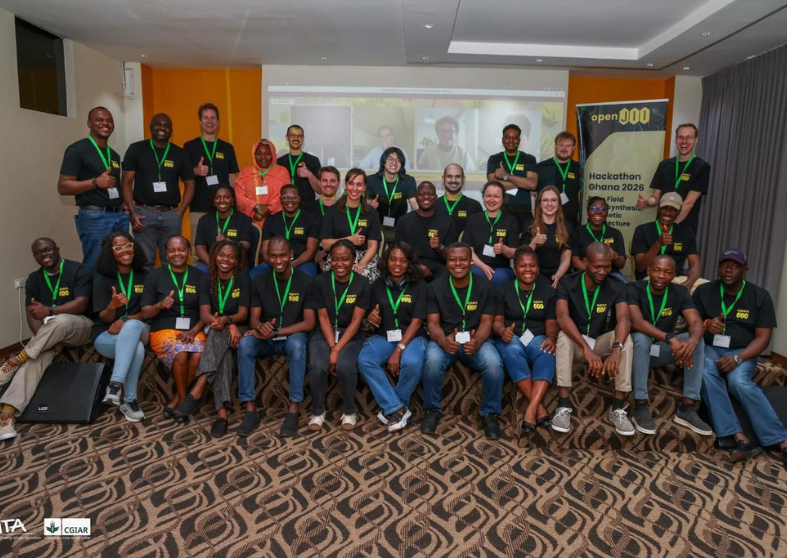
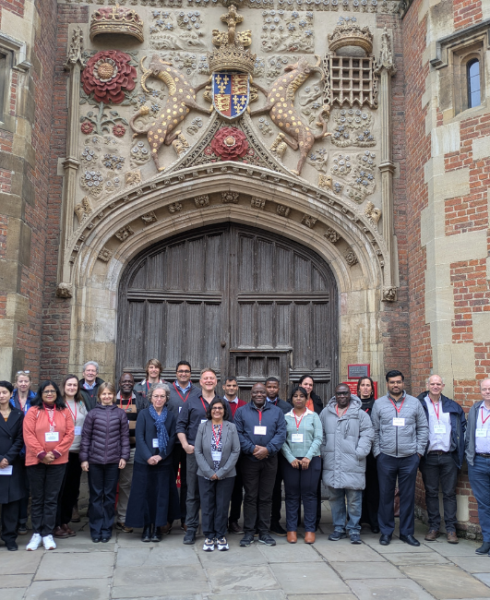
Image: Participants at the international photosynthesis hackathon 2026. From left to right: top row – Olakunle Sansa, Joseph Mhango, Johannes Kromdijk, Wajiha Abdullahi Muaz, Andris Finkbeiner, Marvin van Aalst, Jacky To, Dominik Vrbic, Olusegun Akinyemi, Elouen Corvest, Tom Theeuwen; middle row – Georgina Lala Ehemba, Kenneth Chukwuka Mkpuma, Anna Matuszyńska, Thierry Hodehou, Zsa Zsa Boyny, Anika Unger, Omotola Dorcas Olaoye, Uchendu Ugochukwu Kelechi; bottom row – Ifeoluwa Odesina, Ihuoma Ogechi, Regina Tende, Mary Olayinka, Kolawole Olalekan, Olivia Kacheyo, Adenike Oluwaseun Dad, Isaac Osei-Bonsu, Esther Anokye, Olukunle Babatunde Bashir, Solomon Ntukidem, Olalekan K.Obisesan. Photo credit: IITA-CGIAR.
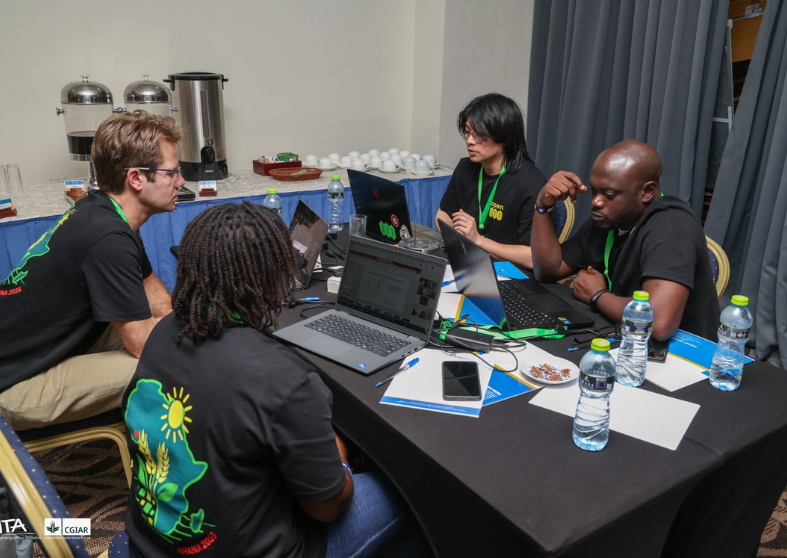
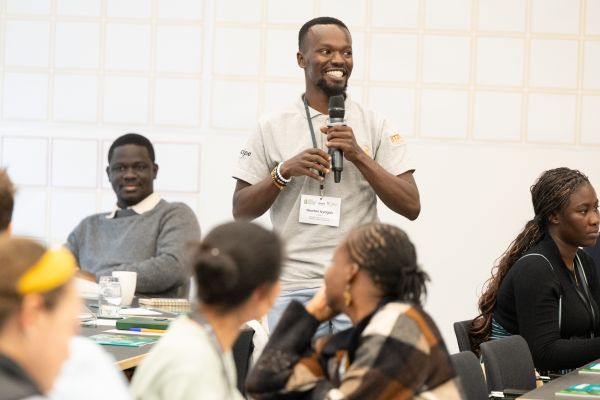
Image: One of the teams involving Johannes Kromdijk at the international photosynthesis hackathon 2026. Photo credit: IITA-CGIAR.