The hologenome theory of susceptibility-gene discovery – an innovative way to boost disease resistance in crop plants
Scientists at the Crop Science Centre, in collaboration with partners around the world (principally the University of California Davis and the University of Bonn), have discovered that tweaking plant metabolic pathways can help us prevent nematodes from causing crop diseases.
Published in Nature Communications, the study focused on the nematode-host plant ‘hologenome’ – which includes the DNA of both the host plant and all its symbiotic microbes as one entity – to define essential stages in the metabolism of a select range of essential metabolites, without which the nematode fails to cause disease in the plant. Some stages of the metabolic process occur in the nematode, and other stages occur in the host plant, and if any one of the stages fails, then the process as a whole fails.
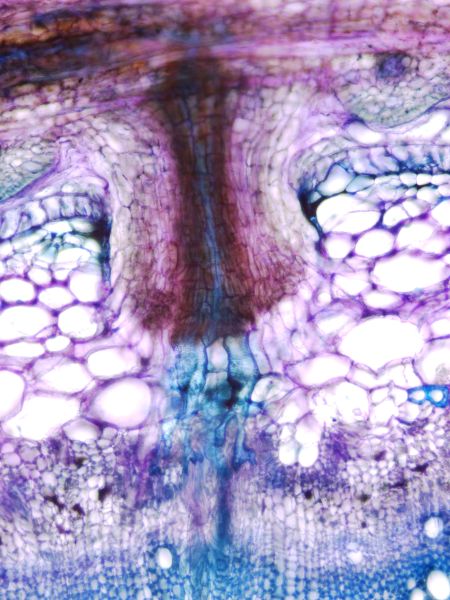
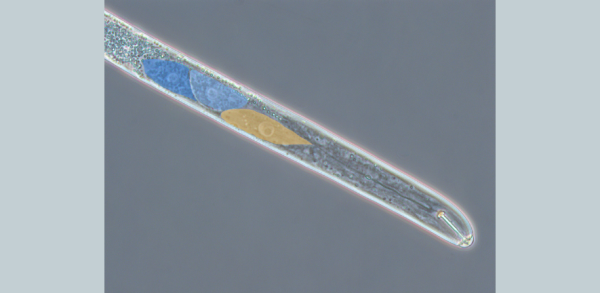
Dr Sebastian Eves-van den Akker and his team in the Plant-Parasite Interactions research group at the Crop Science Centre first sequenced and assembled a high-quality genome of the cyst nematode Heterodera schachtii. By analysing the hologenome of the plant-nematode infection site they were able to identify metabolic pathways that were incomplete in the parasite but complemented by the host, one of which was the Vitamin B5 pathway, the beginning of which is switched on in the plant, and the end of which is switched on in the nematode. Removal of either the plant-encoded or nematode-encoded steps in the pathway greatly reduced parasitic success.
“People often think the best way make a plant more resistant to an attacker is to activate or even add a gene that improves the plant’s resistance in some way.,” said Dr Eves-van den Akker. “What we’ve been able to show here is an effective method of achieving the same results by doing the opposite, by switching off a gene in the plant that the nematode relies on to cause disease. This is important because, from a practical point of view, it’s so much easier to remove something that is there than to add something that isn’t.”
This discovery offers opportunities for the use of modern CRISPR technologies to boost crop resistance. These allow the targeted removal of ‘susceptibility’ genes in crops (so-called ‘S’ genes), and are already widely applied commercially in many countries.
“Not only have we discovered new genes that we can extract using CRISPR technologies to limit the level of disease in the plant, but we’ve also found a new way of identifying such genes. By taking the plant-nematode genome as one entity, we’ve been able to capture new gene activity that is essential to the success of this symbiotic relationship.”, said Dr Eves-van den Akker. “We’re pleased to dub this the ‘Hologenome theory of S gene discovery’ and are already exploring other crop-disease associations.”