March 2020

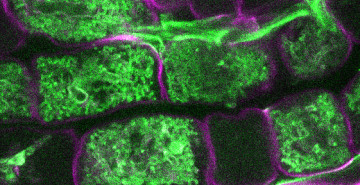
When nutrients are scarce in the soil, plants recruit helper fungi into life-long alliances called arbuscular mycorrhizal (AM) symbioses. Fungal assistance – despite desirable – can become costly as it is fuelled by considerable amounts of carbon delivered by the plant. At the Department of Plant Sciences, University of Cambridge, Dr. Jeongmin Choi in the research team of Professor Uta Paszkowski, discovered a protein from rice, called SMAX1, that functions as a molecular brake to control the plant’s engagement with the fungus (published on Nature Communications). Via biochemical dialogues, plants ‘check-out’ potential partner fungi, stimulate appropriate candidates by secretion of chemical called strigolactones, and only then commit to the interaction. In the presence of SMAX1, the plant no longer sees the fungus as an attractive ally, suppressing essential symbiosis programmes, and refraining from encouraging the fungus through increased production of strigolactones.
Choi, J., Lee, T., Cho, J. et al. The negative regulator SMAX1 controls mycorrhizal symbiosis and strigolactone biosynthesis in rice. Nat Commun 11, 2114 (2020).
News
November 2025
COP30 film highlights how Crop Science Centre collaborations are empowering farmers through sustainable innovation

News
October 2025
Professor Uta Paszkowski appointed co-Director of ENSA in new joint leadership to accelerate breakthrough crop science for smallholder farmers

News
October 2025
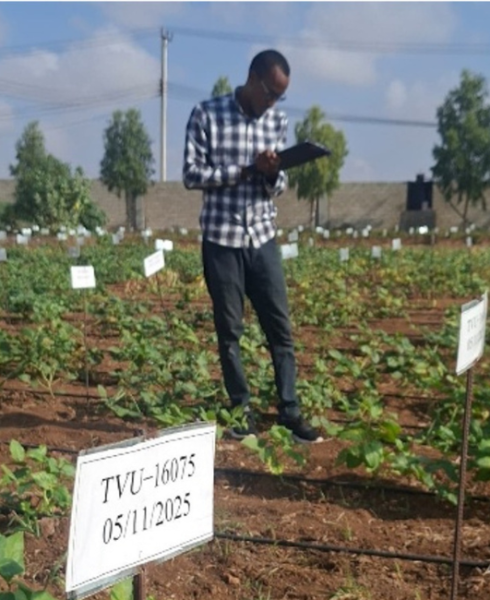
Unlocking the potential of Bambara groundnut for food security and climate resilience

News
October 2025
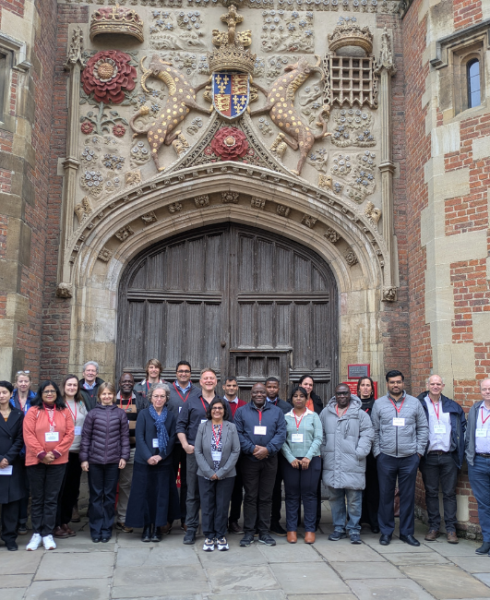
Celebrating the power of international partnerships to deliver impact from science

News
June 2025
How Plants Tailor Organ Development to Engage with Friends and Foes in Symbiotic Interactions

News
May 2025
Uta Paszkowski elected to the National Academy of Sciences

News
April 2025
Disrupting ‘communication’ with plants could limit cyst nematode infections

News
January 2025
Dr Victor Souza Coordinates Editorial on Plant-Parasitic Nematodes and Sustainable Crop Management

News
January 2025
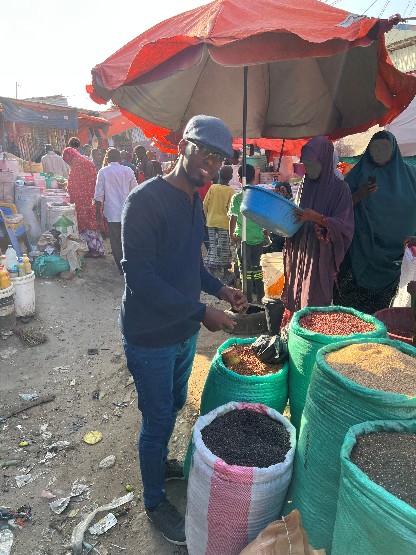
Ahmed's Research visit to Somalia

News
January 2025
Applying conventional and cell-type-specific CRISPR/Cas9 genome editing in legume plants

News
January 2025
Using fungus to protect key crops in Brazil

News
October 2024
Precision breeding: legislation, applications, and implications for the UK