We are delighted to share that Professor Uta Paszkowski and Professor Beverley Glover from the Department of Plant Sciences at the University of Cambridge have been elected as Fellows of the Royal Society, the UK’s national academy of sciences and the oldest science academy in continuous existence.
Professor Julian Hibberd, Head of the Department of Plant Sciences, said: “I am absolutely delighted that Beverley Glover and Uta Paszkowski have both been elected Fellows of the Royal Society. This is wonderful recognition of their work, their mentorship of others, and their very significant contributions to knowledge. Not only have Beverley and Uta delivered truly excellent research, at the same time they have both played major roles in shaping Plant Sciences at Cambridge and beyond. We owe them a debt of thanks as well as the heartiest of congratulations.”
Professor Uta Paszkowski FRS
Uta Paszkowski is the Director of the Crop Science Centre which is part of the Department of Plant Sciences at the University of Cambridge, Head of the Cereal Symbiosis group at the Crop Science Centre and a Fellow of St John’s College.
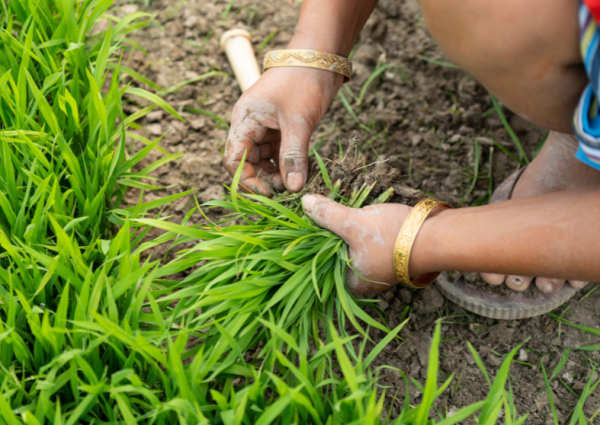
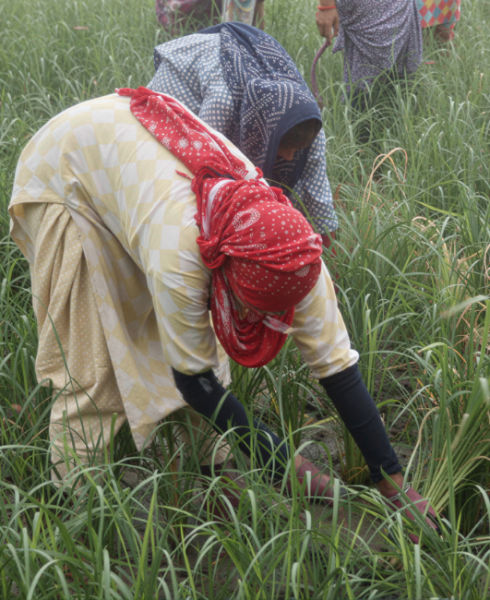
Her research investigates how major cereal crops, such as rice and maize, communicate and exchange nutrients with beneficial soil fungi to enhance agricultural sustainability.
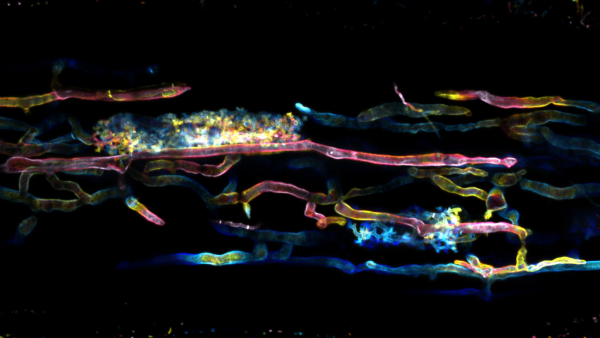
Specifically, her team works to elucidate the molecular mechanisms underpinning the development and functioning of arbuscular mycorrhizal (AM) symbiosis. This symbiosis significantly improves plant mineral nutrition and holds immense potential for the future of sustainable crop production.
To facilitate this nutritional trade of delivering soil minerals in exchange for obtaining plant carbon, the fungus intracellularly colonises live plant cells. This extreme form of compatibility relies on complex, yet exquisitely fine-tuned plant-fungal communication that ultimately underpins the mutualistic outcome of this interaction.
Taking molecular genetics approaches, the Paszkowski team has advanced our understanding of the key signalling components mediating recognition and accommodation of the fungus in cereals. They have also unravelled the mechanistic details of the symbiotic nutrient transfer. Future benefits of these insights include the design of strategies for maximising the utility of AM symbioses across diverse agricultural settings.
“It is wonderful and not just a little overwhelming for me and my team to see this level of recognition for our science,” said Professor Paszkowski.
“We study one of the most ancient and naturally prevalent plant symbioses with soil-borne fungi called arbuscular mycorrhizal symbiosis. Symbiotic mineral nutrition is the strategy nature invented to ensure plant productivity; it is both fascinating and important at the same time.”
“Our work spans from academic discovery to translational science, with the goal of advancing knowledge and maximising the use of this symbiosis as a sustainable alternative to synthetic fertilisers in global agriculture.”
Professor Beverley Glover FRS
Beverley Glover is the Director of the Cambridge University Botanic Garden, Head of the Plant Evolution and Development group at the Department of Plant Sciences, and a Fellow of Queens’ College.
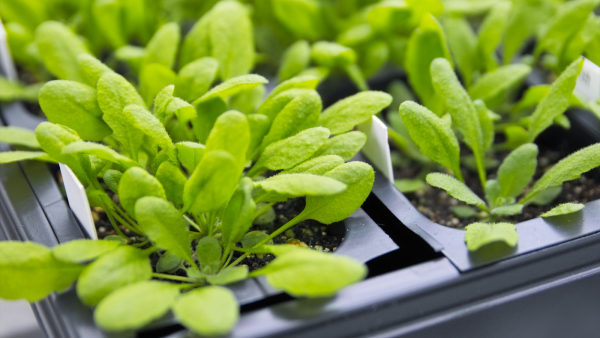
Professor Glover’s work as an evolutionary developmental biologist explores how flowers develop the incredible variety of shapes, colours and surface textures that attract pollinators. Her research focuses on the microscopic features of petals – their structure, texture and chemistry – and how these influence the way flowers reflect light and how insects respond to it.
As flower development can change rapidly over evolutionary time, her research has shown how different plant species can independently evolve similar traits and how complex floral features such as the microscopic ridges that create iridescent colour arise. Her work also examines the intricate relationships between plants and their pollinators, providing insights that help scientists protect biodiversity, anticipate how ecosystems may respond to environmental change and improve crop varieties that support global food security.
“I am absolutely thrilled to be elected to the Royal Society, and proud to join other colleagues whose work I value so highly,” said Professor Glover. “I’m so proud of the work of my research group and the wider team at the Botanic Garden too, and I hope they will all feel some pride at knowing this election reflects the high quality of their work.
“We are working to understand how a single, simple flower diversified into the 350,000 different types of flowers we see today, in an astonishingly short evolutionary time. We want to understand how different shapes, symmetries, colours, patterns and textures develop on flowers and how those developmental pathways evolve.
“Our work is vital in understanding the relationship between plants and pollinators, which is so important for food production. I also hope that it helps people to see just how clever evolution has been, to generate the amazing diversity of flower form.”
“I’m really grateful to all the researchers I’ve worked with over the years for the shared ideas and adventure that have led to this award, and hope that they can also share in the sense of achievement and pride.”
About the Royal Society
The new Fellows join the ranks of distinguished scientists including Stephen Hawking, Isaac Newton, Charles Darwin, Albert Einstein, Lise Meitner, Subrahmanyan Chandrasekhar and Dorothy Hodgkin.
Sir Paul Nurse, President of the Royal Society, said: “I am delighted to welcome this newest group of exceptional scientists to the Fellowship of the Royal Society.
“Their contributions reflect the highest standards of scientific endeavour. Whether advancing our understanding of vaccines or exploring the transformative potential of mathematics and computation, their work exemplifies the enduring value of curiosity, creativity and rigorous inquiry.
“Our Fellowship is strengthened not only by individual distinction, but by the diversity of perspectives and experiences its members bring. This incoming cohort highlights the truly international character of contemporary science and underscores the vital role that plays in achieving breakthroughs that benefit us all.”
The Royal Society is a self-governing Fellowship of many of the world’s most distinguished scientists drawn from all areas of science, engineering, and medicine.
The Society’s fundamental purpose, as it has been since its foundation in 1660, is to recognise, promote, and support excellence in science and to encourage the development and use of science for the benefit of humanity.
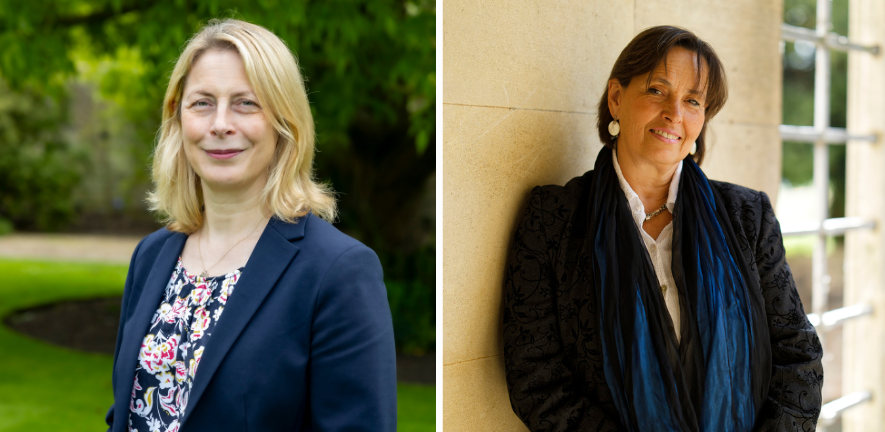
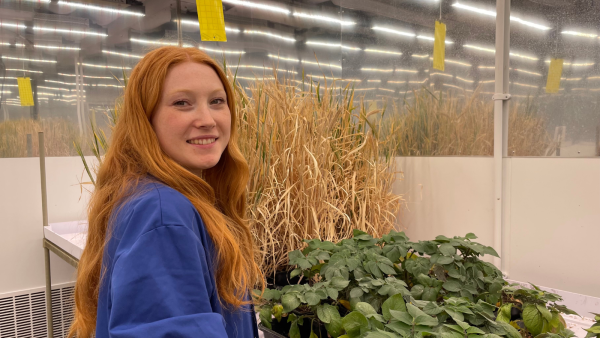
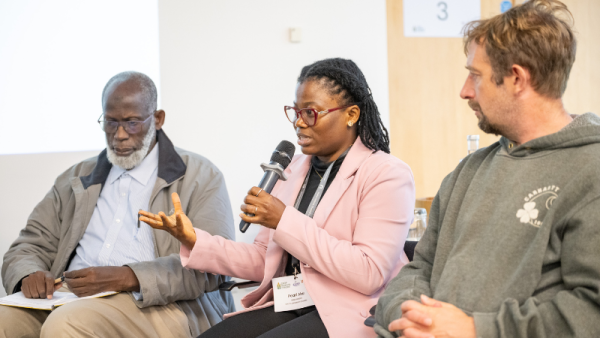
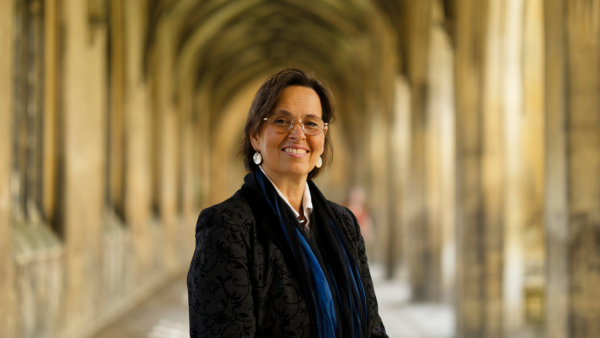
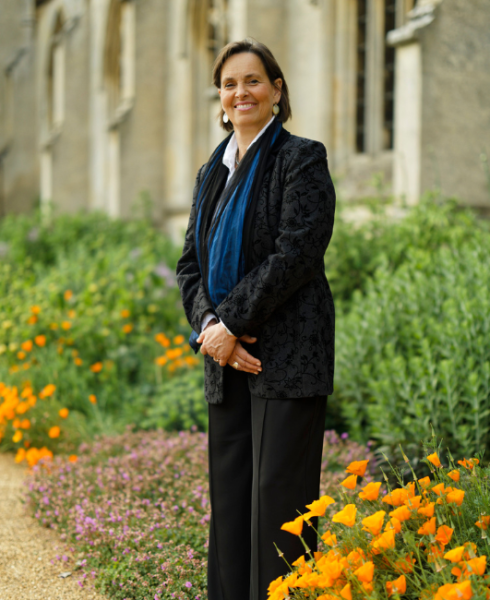
Image: Professor Beverley Glover (left) and Professor Uta Paszkowski (right) – new Fellows of the Royal Society 2026. Photos © University of Cambridge.