Plants must carefully strike a balance between harvesting sunlight to fuel photosynthesis and protecting themselves from light damage. Part of this balancing act is performed by antenna proteins that are bound to light-harvesting molecules inside plant chloroplasts. Mostly known for harvesting energy from sunlight, some antenna proteins can dissipate excess absorbed energy as heat through a photoprotection mechanism called non-photochemical quenching (NPQ).
A recent publication led by Dr Johannes Kromdijk, Head of the Environmental Plant Physiology group, investigated the function of one antenna protein called CP26. While it was previously hypothesized that CP26 played a role in NPQ, the team’s findings shift the understanding of CP26’s function and suggest that it affects the structural organization of the photosynthetic system instead of directly participating in NPQ. The study was recently published in the journal Plant Physiology.
This work – a collaboration between scientists at the University of Cambridge and the University of California, Berkeley – is part of the Realizing Increased Photosynthetic Efficiency (RIPE) project, an international effort to improve crop productivity by enhancing photosynthesis. One of RIPE’s research objectives is to optimize NPQ rates to increase photosynthetic efficiency and boost crop yields. This goal prompted the researchers to explore if engineering antenna proteins like CP26 can enhance plant performance, necessitating a clearer understanding of CP26’s specific function.
The team tested whether CP26 plays a role in NPQ by blocking its expression in vivo in the model plant Arabidopsis. They simultaneously altered other factors known to affect NPQ. These included the sensor protein PsbS which dissipates excess light energy as heat. They also altered the xanthophyll cycle, a process that switches antenna proteins between light-harvesting and heat dissipation and controls the concentration of light-harvesting pigment and antioxidant zeaxanthin. Finally, they altered the pH gradient across the thylakoid membrane inside plant chloroplasts, a key factor that tells plants to switch from harvesting light to photoprotection. This approach allowed them to assess if the absence of CP26 impacted the mechanisms known to affect NPQ factors by comparing NPQ levels in the altered plants to the control plants.
“During photosynthesis, one part of the chloroplast gets more acidic, when this reaches a threshold, it signals to the plants that too much light energy is being absorbed and that photoprotection needs to engage,” said Dr Kromdijk. “Several proteins, including PsbS and potentially CP26, can respond to the increased acidity and trigger NPQ.”
Plants lacking CP26 showed moderate modifications to NPQ rates and photosynthetic efficiency. However, to the researcher’s surprise, the impairment of xanthophyll cycle and modulation of PsbS levels had similar effects in the plants without CP26 when compared to plants with CP26.
“Based on previous work, we were expecting that CP26 might interact with the xanthophyll pigment zeaxanthin to help protect plants against too much light,” said Dr Julia Walter, lead author of the study and Postdoctoral Research Associate in the Kromdijk lab. “Instead, it seems that loss of this protein affects energy flow via a rearrangement of the photosynthetic antennae.”
The findings shift how scientists understand the role of CP26 and suggest that the physical organization of the photosynthetic system may be just as important as its chemical processes.
“Previous work had led to the hypothesis that CP26 was involved in a slow form of NPQ, which we would like to decrease in RIPE,” said Dr Kromdijk. “Our work here shows instead that CP26 is not involved in this slow type of NPQ but that plants lacking CP26 have modified NPQ responses for different reasons. We think that the altered interaction between neighbouring antenna complexes or altered pH sensitivity of antenna complexes lacking CP26 are the most likely explanations for our findings.”
Future studies will focus on testing modified versions of CP26 to better understand its role and to identify where energy dissipation occurs. The researchers are also extending this work to other components of the photosynthetic system that may play a larger role in light protection.
This work was funded as part of the research project Realizing Increased Photosynthetic Efficiency (RIPE), and was funded by the Gates Foundation, the Foundation for Food & Agriculture Research, and the UK Foreign, Commonwealth & Development Office. This study is part of RIPE’s Relaxing Photoprotection research objective.
Reference: Julia Walter et al., ‘CP26 is not involved in qE- or qZ-type non-photochemical quenching in Arabidopsis.’, Plant Physiology, DOI: 10.1093/plphys/kiag207
Adapted from an article by Brittany Prempin published on the RIPE project website on 16 June 2026. Read the original article.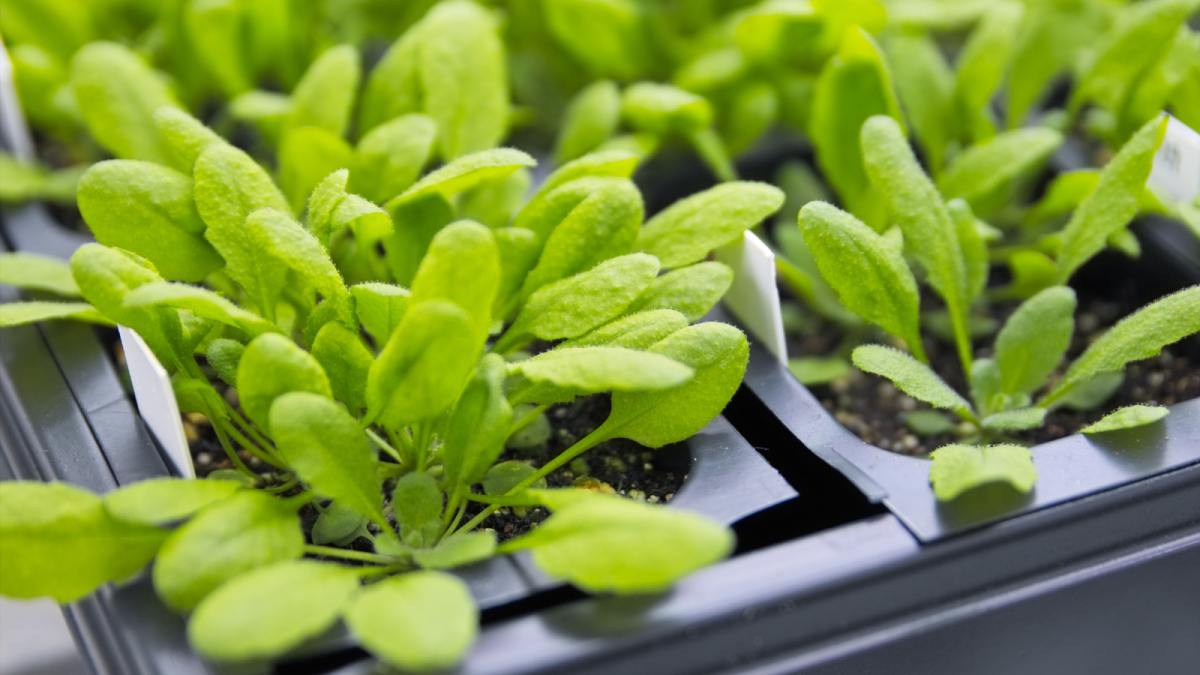
Researchers investigate the function of antenna protein CP26 inside model plant Arabidopsis. Credit: pkujiahe / Getty Images.