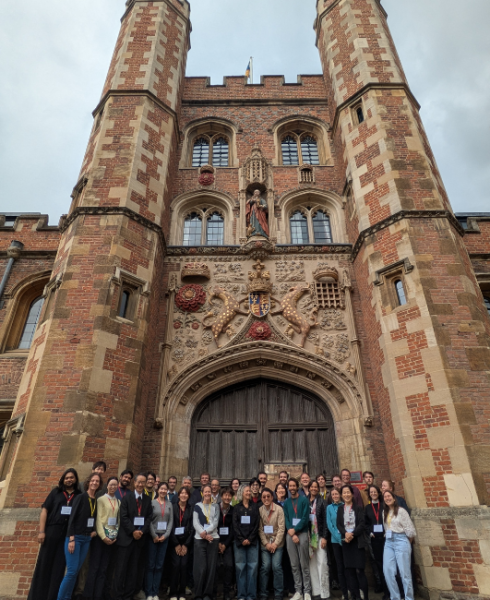
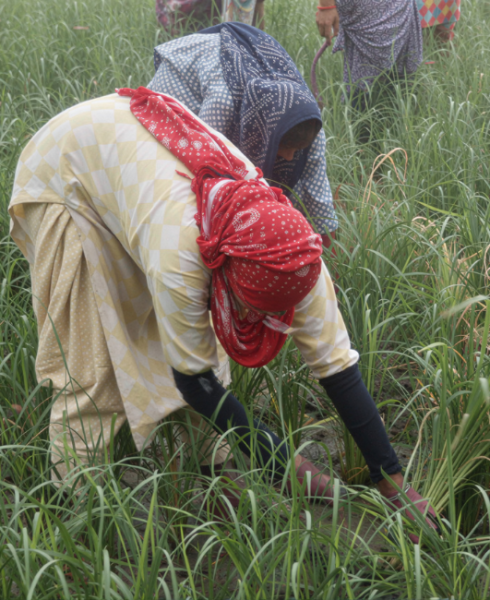
The Africa Crop Forum 2026, held on 12-14 October in Abidjan, Côte d’Ivoire, was a catalyst for new ideas and partnerships to tackle field realities in Africa. Organised by WAVE RESEARCH and the Crop Science Centre – part of the Department of Plant Sciences at the University of Cambridge – the Africa Crop Forum brought together researchers, plant breeders, funders, and farmers from across Africa, Cambridge, and beyond. Together they discussed ideas and co-developed solutions to strengthen climate resilience, tackle crop diseases, and improve food security across Africa.
Turning African priorities into action
The forum was based on the principle that effective solutions emerge when research is grounded in African priorities and delivered through equitable international partnerships. Participants first had the opportunity to see cassava plants growing in the field and learn how it is processed and cooked to become much loved dishes such as attiéké and foutou. They then explored a range of agricultural challenges, from drought, soil health, pests, and diseases, to seed systems, breeding pipelines, and sustainable food systems. Through interactive sessions and networking, participants connected across disciplines, institutions, and countries. In doing so, they worked together to develop collaborative project ideas capable of delivering real-world impact.
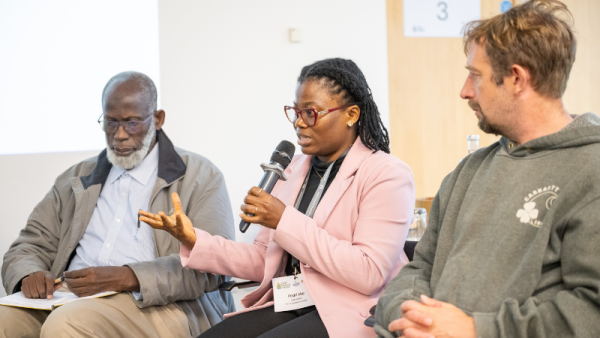
“The Africa Crop Forum brought together young African scientists who want to change Africa,” said Professor Justin Pita, Executive Director of WAVE RESEARCH and based in Côte d’Ivoire. “This meeting gave them the opportunity to bring their ideas together and to make connections to bring about this change. I have no doubt that three years from now we’ll see the tangible impact of this.”
The sentiment was shared by Crop Science Centre Director, Professor Uta Paszkowski, who added, “I was inspired by the sense of collaboration. We were really breaking boundaries, tearing them down as a matter of fact, and bringing people together to make things happen.”
Supporting the next generation of agricultural innovation
A particular focus of the Forum was supporting the next generation of agricultural scientists who will lead future research and innovation across the continent. Early-career scientists played a central role throughout the event, leading discussions and building professional networks that could grow into long-term collaborations.
“The forum has given me an opportunity to interact with people from different areas and different research sections,” said Miring’u Newton Nyagah, a Research Fellow at the International Institute of Tropical Agriculture (IITA), Kenya. “This has given me more courage, especially in terms of getting my ideas out there.”
For established researchers such as Dr Mavis Owusuaa Osei-Wusu, a lecturer at the West Africa Centre for Crop Improvement (WACCI) at the University of Ghana, one of the most valuable outcomes was the opportunity to build partnerships around new research ideas. “I also had a chance to develop a proposal through this program which may get funded, who knows?”
From research to farmers’ fields
Importantly, the discussions did not end with research. Plant breeders and social scientists helped ensure that conversations remained focused on outcomes that can benefit farming communities. Their contributions reinforced the importance of translating scientific discoveries into improved crop varieties, more resilient production systems, and better livelihoods.
“Climate change has impacted most of the farmers in Africa and the major mitigation measures are to have drought tolerant crops such as cassava and sorghum,” said Emmanuel Justin Mrema, a plant breeder and Centre Director at Tanzania Agricultural Research Institute (TARI), Tanzania. “But there are still challenges that I believe the Africa Crop Forum will help to overcome, for example by improving access to better seeds as well as improved processing and marketing of seeds.”
It is the women processing and cooking cassava who have the attention of Dr. Tessy Madu, a gender specialist and Research Director at the National Root Crops Research Institute (NRCRI), Umudike, Nigeria. “It’s a lot of work and drudgery for these women,” she says. “So how do we reduce the drudgery? How do we make this less strenuous for them and put more money in their pockets? That’s my concern.”
Looking ahead: From Abidjan to Cambridge
As the forum concluded, participants left not only with new contacts and project concepts, but with a shared sense of purpose. The Africa Crop Forum 2026 demonstrated that when people with different backgrounds and expertise come together, they can lay the foundations for research that is scientifically excellent, locally relevant, and capable of delivering meaningful benefits for farmers and communities across Africa.
The momentum generated in Abidjan will continue over the coming year as participants further refine project concepts and pursue collaborative funding opportunities. Many will reconvene at the Africa Crop Forum 2027 in Cambridge, United Kingdom, providing an opportunity to share progress and accelerate the journey from scientific discovery to agricultural impact. If the optimism and ambition felt at the Africa Crop Forum 2026 are any indication, the impact of this event will be felt long into the future.
Watch the video on YouTube: Africa Crop Forum 2026
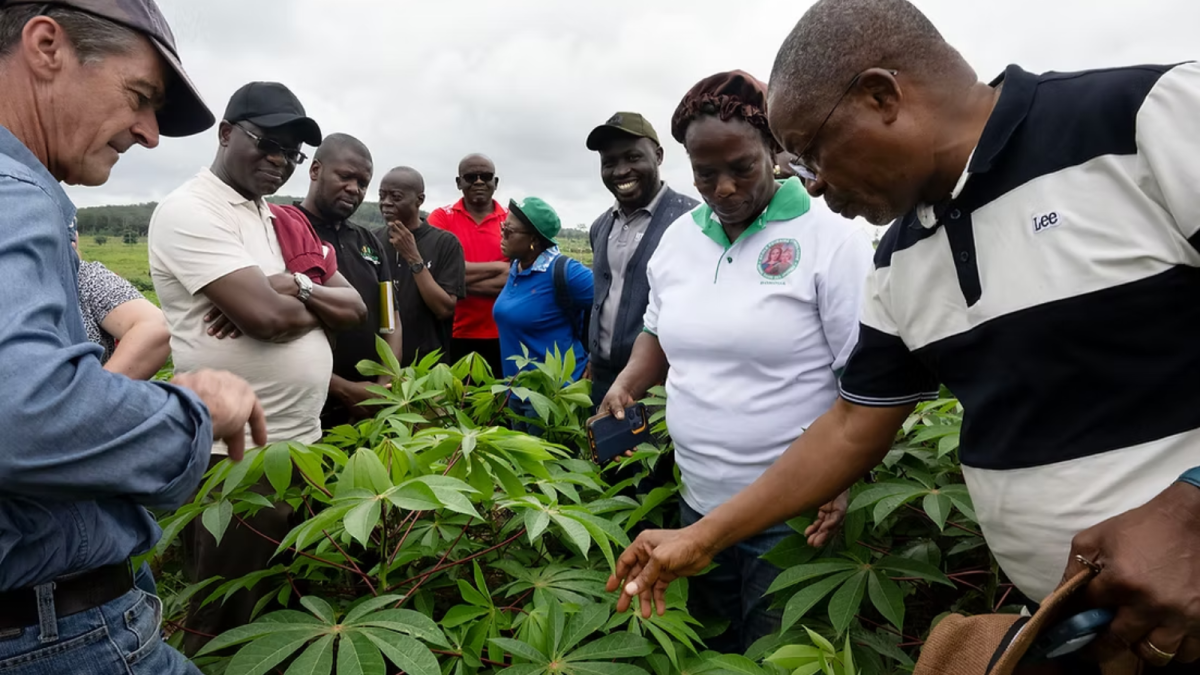
Participants of the Africa Crop Forum 2026 visiting a cassava field outside of Abidjan, Cote d’Ivoire. Credit: Alastair Fyfe.
Text adapted from an article by Emma Jane Steer, Communication Lead for ENSA (Enabling Nutrient Symbioses in Agriculture).