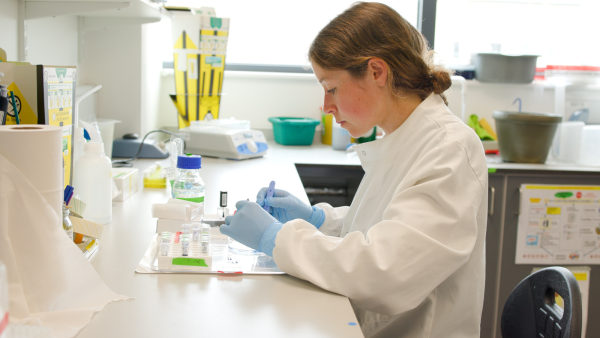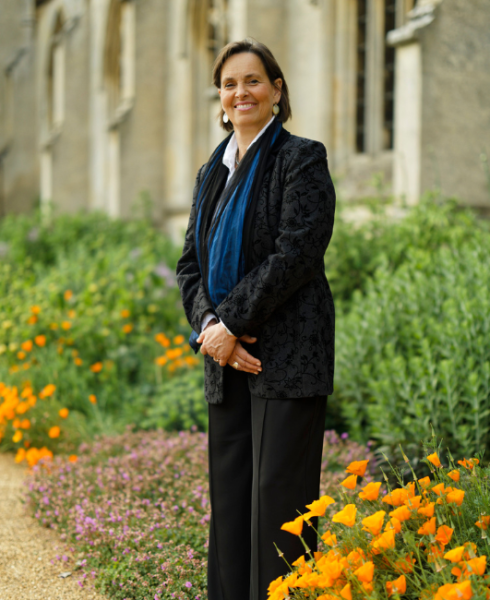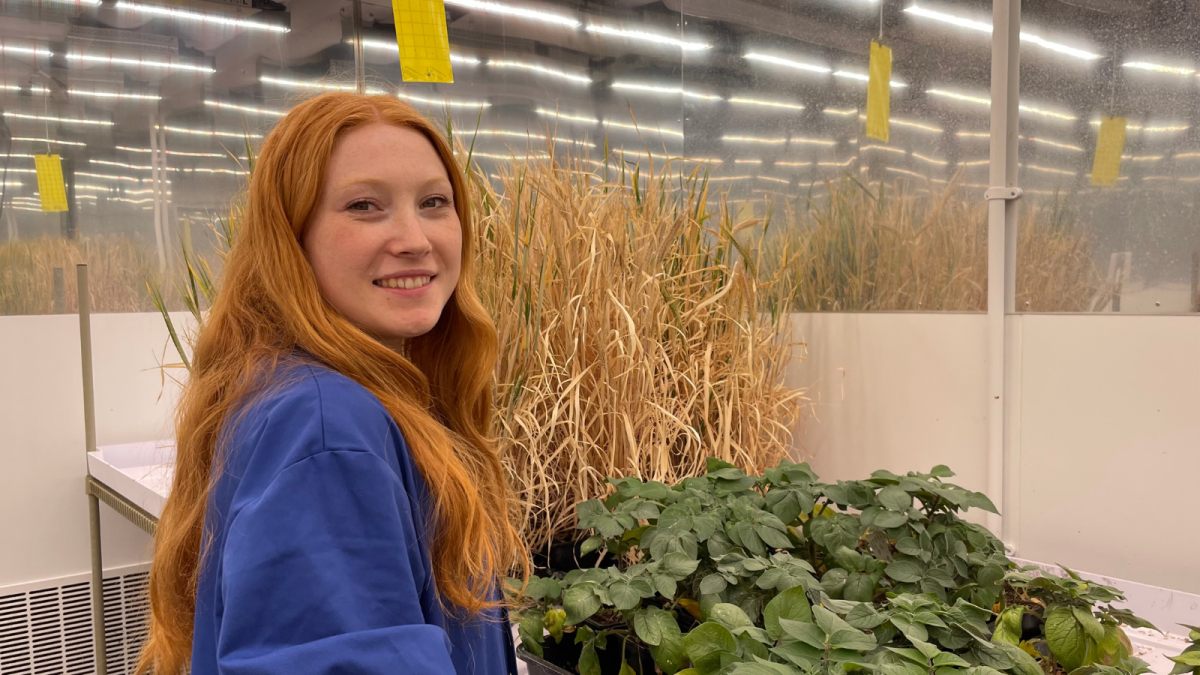
Lauren Eddie at the Crop Science Centre, Cambridge. Credit: University of Cambridge.
In our ‘Science to solutions’ series we talk to Cambridge scientists working with industry, business, NGO and other partners to help solve real-world problems using cutting-edge research.
Lauren Eddie is a final-year PhD student at the Cereal symbiosis group at the Crop Science Centre. She is collaborating with the potato breeding company Solynta to develop a novel gene-editing technique that could transform how we produce improved potato varieties.
Lauren shares how her project bridges fundamental science and industry expertise to help meet the needs of modern agriculture.
What real-world problem are you tackling through this partnership?
As the world’s most important non-cereal food crop, the potato is a staple for over a billion people. However, its production faces constant threats from environmental stresses, pests, and diseases. There is also an urgent need to make agriculture, and the crops we grow, more sustainable.
Despite these modern challenges, many of the potato varieties we grow today are over a century old. A particular hurdle is that potatoes are typically propagated clonally via tubers, meaning some of these varieties have remained genetically unchanged since their creation.
How can gene editing help, and what are the limitations of the current method?
In crop breeding, there is a big push to develop new varieties with better resilience and adaptability to modern challenges. A significant advantage we have now is the ability to make targeted changes using gene editing, which is much faster than conventional breeding.
However, existing methods are limited. While gene editing has transformed plant genetics, current approaches rely on laborious tissue culture techniques to deliver the molecular machinery – the genetic scissors (Cas enzymes) and cutting guides (gRNAs) – to the plant. This involves growing plants in sterile conditions and regenerating them from an edited ‘callus’ stage, which is essentially a clump of undifferentiated cells.
Not only is this process slow and labour intensive, but the bacterial Cas9 transgene must be removed by crossing out before a crop can be officially classified as gene-edited (GE) rather than genetically modified (GM) – a distinction that is vital for regulatory acceptance.
How does your research provide a solution?
Working with Solynta, I am exploring an alternative delivery method: using a virus as a carrier for the gene editing components. This has involved identifying suitable viruses to infect the potatoes and modifying them to carry the gene editing machinery.
Whole plants can then be infected with the virus and edited. This circumvents the need for tissue culture and reduces the time required for editing to a single plant life cycle. If these edits occur in reproductive cells, they can be inherited by the next generation. Crucially, the molecular toolkit doesn’t integrate into the plant’s genome, meaning there is no need to remove the Cas9 transgene to meet GE regulations.
What has been the most rewarding part of this work?
It has taken years of trial and error to get the method working in potatoes. Despite the challenges, it has been incredibly satisfying to figure out what wasn’t working and develop alternative ideas that eventually proved successful. So far, we have identified a suitable viral vector, identified optimal growth conditions and achieved somatic editing using the approach.
What’s the best part of teaming up with Solynta?
Partnering with Solynta has been essential because of the complexity of the potato genome. Standard potato varieties are ‘heterozygous tetraploids’, which means they have four copies of every gene. Solynta, however, is a hybrid breeding company that is developing ‘diploid’ varieties.
These diploids have only two copies of each gene – like humans – which enables faster genetic improvement with less complex inheritance. From a gene-editing perspective, this is a massive advantage because it means we have half the number of genes to edit.
Another brilliant aspect of Solynta’s system is that their potatoes can be grown from true seed. Unlike traditional tubers, these seeds are disease-free and far easier to transport and store. Solynta’s diploid potatoes provide a stable and efficient genetic background for our research, and the plants readily produce true seed so we can more easily assess whether our edits are heritable.
What has this partnership taught you that you couldn’t learn in a lab?
It has taught me the importance of doing fundamental research in collaboration with the people who will actually use the technology that you develop. In a lab setting it is easy to lose sight of the bigger picture, but working with Solynta ensures my work has a clear path to real impact. Since the passing of the precision breeding bill in the UK in 2025, gene-edited potatoes are becoming a tangible reality.
What is the next step for the project?
The goal is to develop this method into a routine platform for creating stable, gene-edited plants. Such a tool would improve pre-breeding, which is the introduction of desirable traits into elite breeding material.
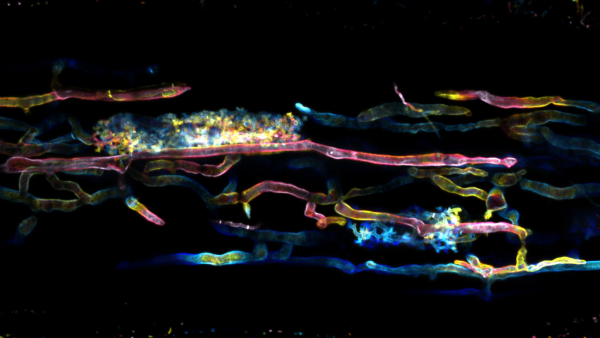
Beyond breeding applications, we want to apply this technology in Cambridge to answer fundamental scientific questions about gene function. Our group researches how plants interact with beneficial soil fungi, where fungi can supply key nutrients like nitrogen and phosphate to the plant. At the Crop Science Centre, we are particularly interested in how this symbiosis can be harnessed to support more sustainable crop nutrition and reduce our reliance on costly and polluting artificial fertilisers.
Ultimately, I hope our research will identify specific targets to improve this symbiosis in potatoes, linking academic discovery with the development of more resilient, sustainable crop varieties. By combining our academic work with Solynta’s industry expertise, we have the opportunity to develop technologies that can introduce traits that would be difficult to achieve through conventional breeding alone.