Newton Nyagah Miring’u, a research fellow at the International Institute of Tropical Agriculture (IITA) in Kenya reflects on learnings from this year’s Africa Crop Forum and the Crop Science Centre’s International Partnerships event in 2025 .
**
What does it really mean to be a successful researcher? Is it the number of publications, the quality of research, the precision of results, or the practicality of the conclusions? These are questions I have often found myself asking as someone immersed in science and research. Over the past two years, however, my experiences have increasingly pointed me towards one answer: partnerships.
My journey into understanding the value of partnerships began in 2025, when, through the International Institute of Tropical Agriculture (IITA) and my mentor, Professor Danny Coyne, I received an invitation to attend a conference at the University of Cambridge’s Crop Science Centre in the United Kingdom. It was my first international conference, and I was not entirely sure what to expect. I approached the trip with curiosity, seeing it as an opportunity to explore a new academic environment as much as to participate in the conference.
What I encountered was inspiring. I was struck by how much can emerge when people from different disciplines and backgrounds come together to exchange ideas. The discussions highlighted the importance of collaboration in addressing shared challenges. I also had the opportunity to explore Cambridge, including King’s College, and appreciate the remarkable effort that goes into preserving and documenting its history.
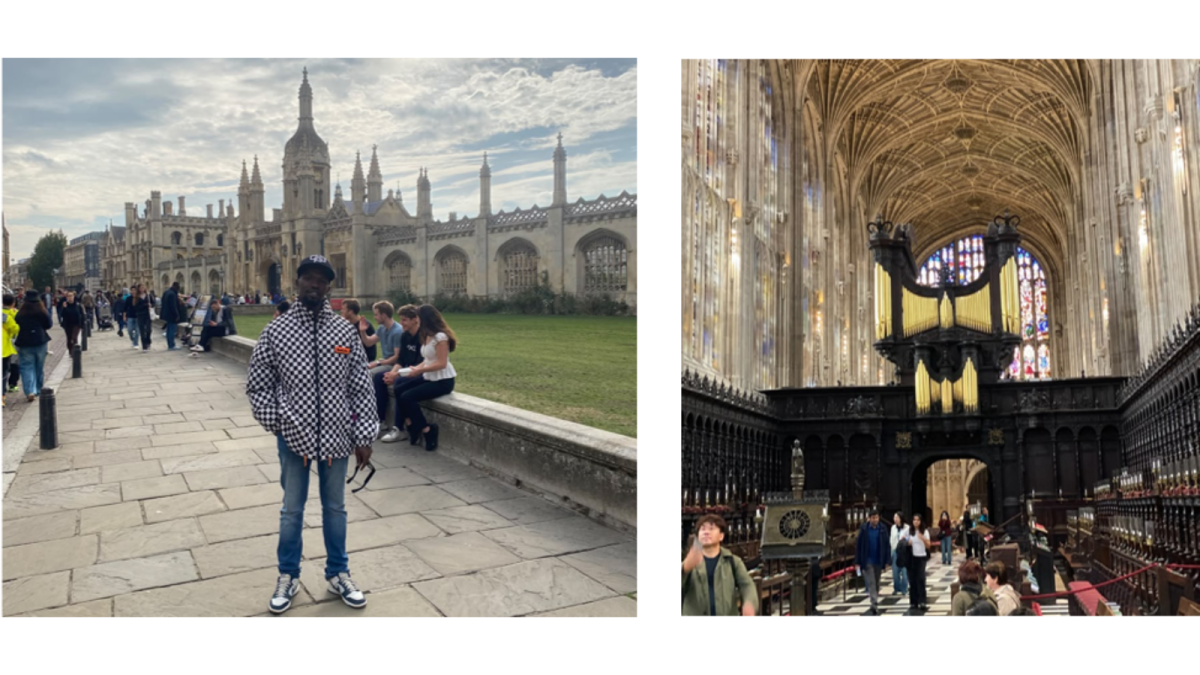
A moment outside the historic King’s College, University of Cambridge (left); inside King’s College Chapel (right). Credit: Newton Nyagah.
One of the most memorable moments of my visit was seeing a descendant of the famous apple tree associated with Sir Isaac Newton, and the room where he once lived in Cambridge. There was something quietly special about standing before a tree whose story is tied to one of history’s most celebrated scientific minds. And for someone who happens to share his name, the moment felt even more personal. I suppose Cambridge gave me a little opportunity to stand in the shadow of another Newton — and perhaps, for a moment, to wonder what ideas might fall from a tree like that. Thankfully, I didn’t need an apple to remind me that some of the most meaningful discoveries begin with curiosity.
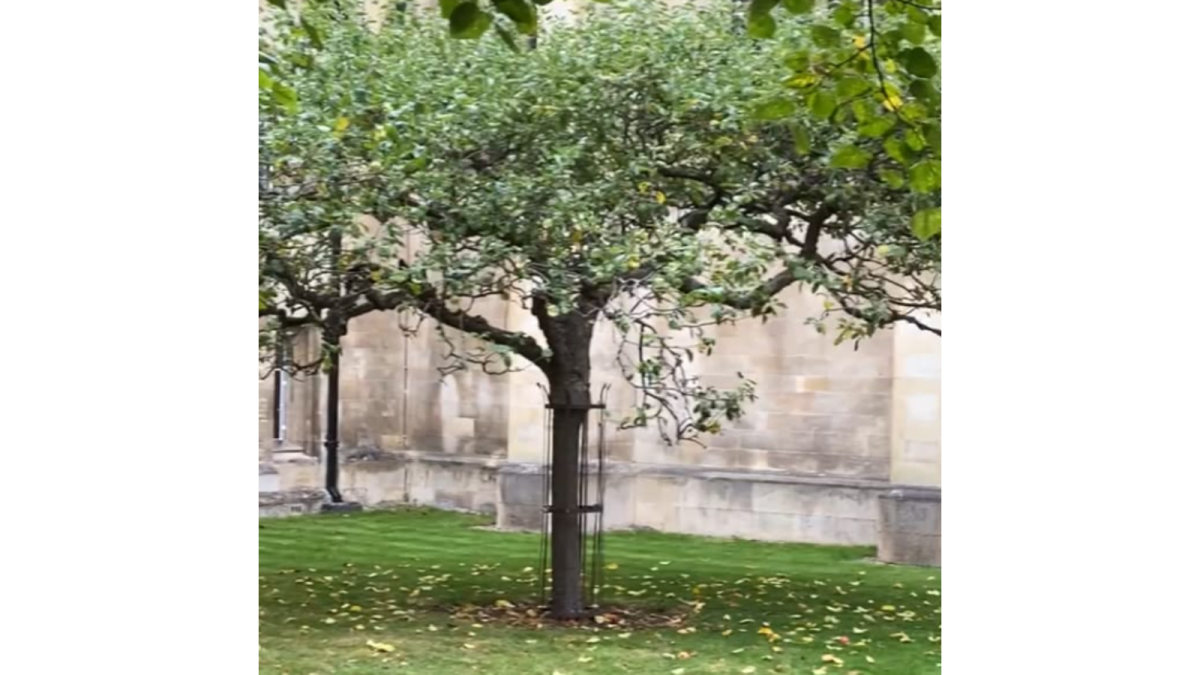
A descendant of the famous apple tree associated with Sir Isaac Newton, at the University of Cambridge — a particularly special encounter for someone who shares his name! Credit: Newton Nyagah.
A message from the discussions particularly stayed with me: research must not only be conducted; it must also be communicated. Sharing findings, progress and emerging trends with different partners and stakeholders is essential. Research may be broad, but every partner has a role to play, and effective communication helps everyone understand how their contribution fits into the bigger picture.
A year later, I had the privilege of attending the Africa Crop Forum 2026 in Abidjan, Côte d’Ivoire, organized by WAVE Research and the Crop Science Centre, University of Cambridge. Building on the conversations initiated in Cambridge, the forum brought together researchers, plant breeders, university lecturers, policymakers and other agricultural stakeholders.
During the forum, I shared the story behind the successful registration of two Irish potato lines with resistance to potato cyst nematodes (PCN) in Kenya. Through this experience, I reflected on how bringing together different expertise, institutions and stakeholders can help move research from the laboratory and field to practical outcomes, particularly in a field like nematology that often receives limited attention.
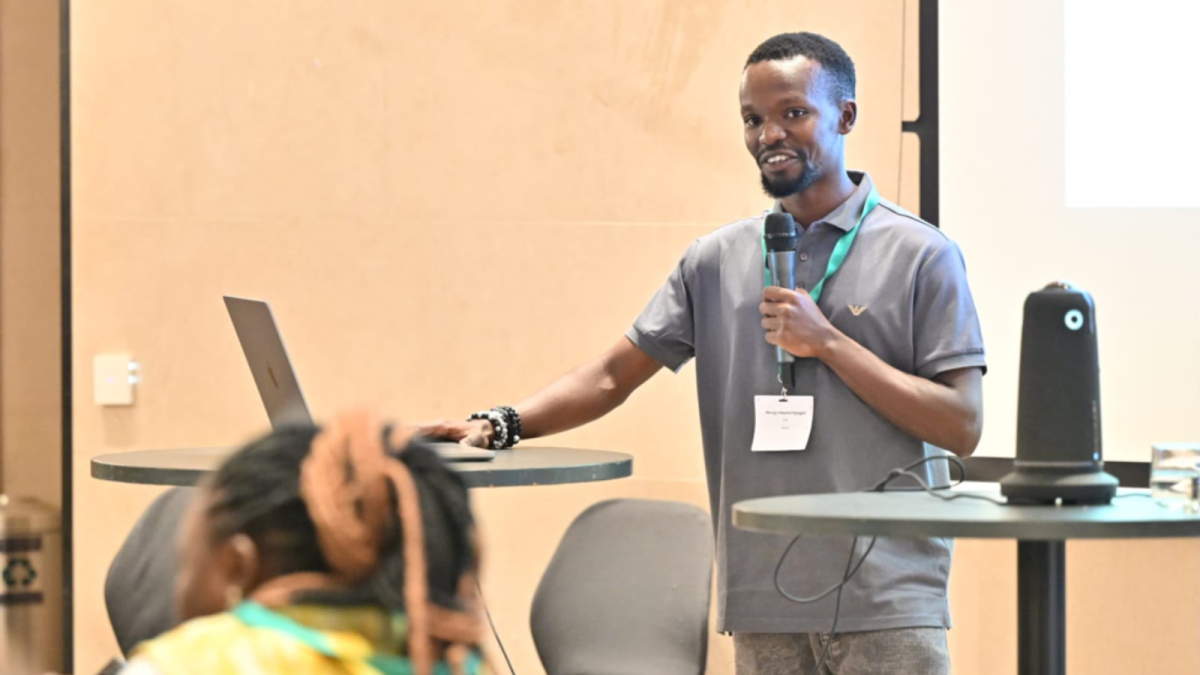
Sharing a nematologist’s perspective on the power of partnerships in advancing an understudied field, highlighting the successful registration in Kenya of two potato lines resistant to potato cyst nematodes (PCN). Credit: Alastair Fyfe.
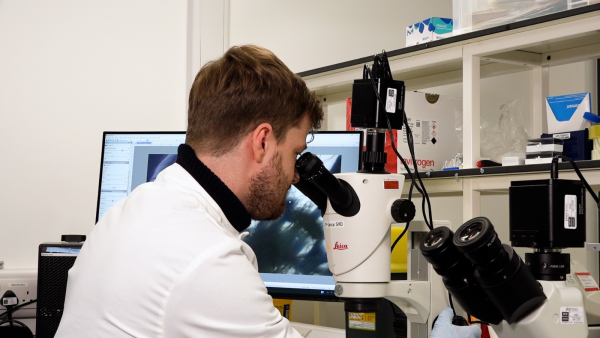
Beyond the discussions and networking, one particularly exciting aspect was the opportunity for researchers to pitch ideas for potential research funding and collaboration. I took this opportunity to pitch an idea centered on connecting East African research with the Crop Science Centre team in Cambridge. Inspired by their work using robotics and artificial intelligence to accelerate nematode imaging and screening, I explored the possibility of bringing aspects of this technology to Africa to strengthen our capacity for nematode screening and research. For me, this was more than pitching a research idea. It was an opportunity to consider how expertise and technologies developed in one setting could be connected with research needs and capacities in another.
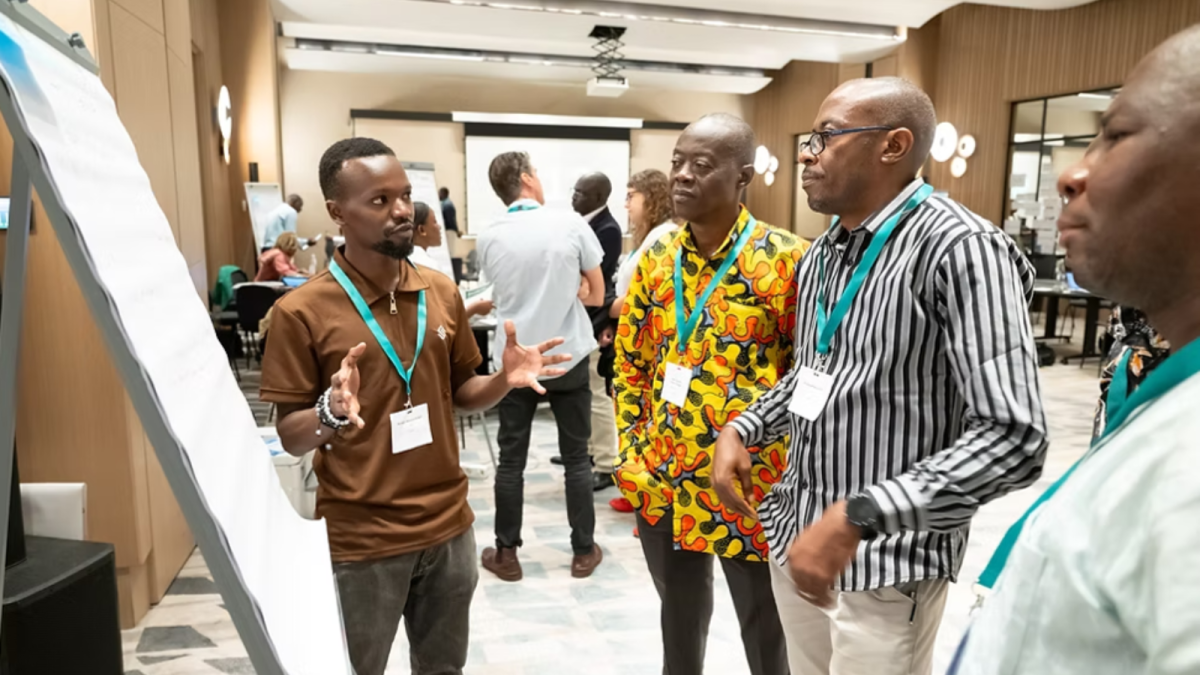
Sharing an idea and exploring new possibilities for collaboration between East African researchers and the Cambridge team. Credit: Alastair Fyfe.
The forum reinforced my belief that meaningful agricultural solutions cannot emerge from research conducted in isolation. They require partnerships that connect scientific knowledge with policy, practice, communication and the experiences of those working across the agricultural sector.
As I reflect on these two experiences, I find myself returning to the question I started with. Publications and research findings remain important, but their value is amplified when they contribute to shared knowledge, meaningful collaboration and practical solutions.
Perhaps success in research is not only about what we discover, but also about who we bring along and what we achieve together.
By Newton Nyagah Miring’u, Research Fellow, IITA