The ancient role of ARK in plant-fungi partnerships revealed
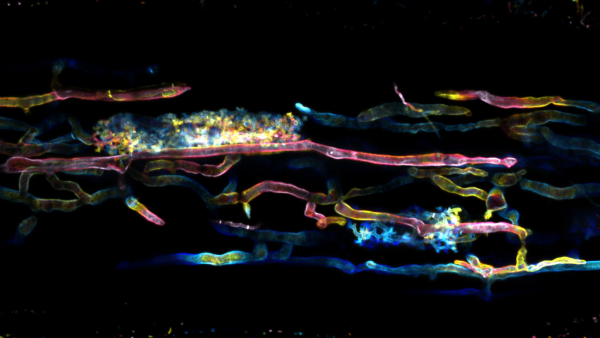
Researchers from the Cereal Symbiosis team within the Crop Science Centre have made significant strides in understanding one of the most crucial relationships in plant evolution: arbuscular mycorrhizal (AM) symbiosis. This ancient partnership between fungi and plants is believed to be one of the key adaptations that enabled plants to colonise land over 450 million years ago.
Alongside colleagues from the Sainsbury Laboratory and NIAB, the team identified a set of evolutionarily conserved genes, molecular pathways, and transcription patterns that are linked to AM symbiosis, which originated before the diversification of land plants. One of the standout discoveries is the role of a gene known as ARBUSCULAR RECEPTOR-LIKE KINASE (ARK), which is essential for maintaining the mutualistic relationship between plants and fungi in this symbiosis.
The researchers demonstrated that ARK’s function is conserved across a wide range of plant species, from modern flowering plants (angiosperms) to ancient liverworts like Marchantia paleacea. This finding suggests that the regulatory role of ARK in sustaining symbiosis evolved before the most recent common ancestor of all land plants, highlighting its importance in the history of plant evolution.
In addition to ARK, the study utilised comparative transcriptome analysis to uncover other evolutionarily conserved genes that likely are crucial for the symbiotic relationship. These genes are involved in pre-symbiotic signalling, intracellular colonisation, and nutrient exchange – all vital processes for successful symbiosis.
This research not only sheds light on the ancient origins of the AM symbiosis but also provides valuable insights into the molecular pathways that are universally associated with this relationship across different plant lineages. Understanding these fundamental mechanisms could have significant implications for improving crop resilience and nutrient uptake, potentially benefiting agriculture worldwide.
By delving into the deep evolutionary past, the Cereal Symbiosis team at the Crop Science Centre continues to reveal the intricate and ancient partnerships that have shaped the world of plants as we know it today.